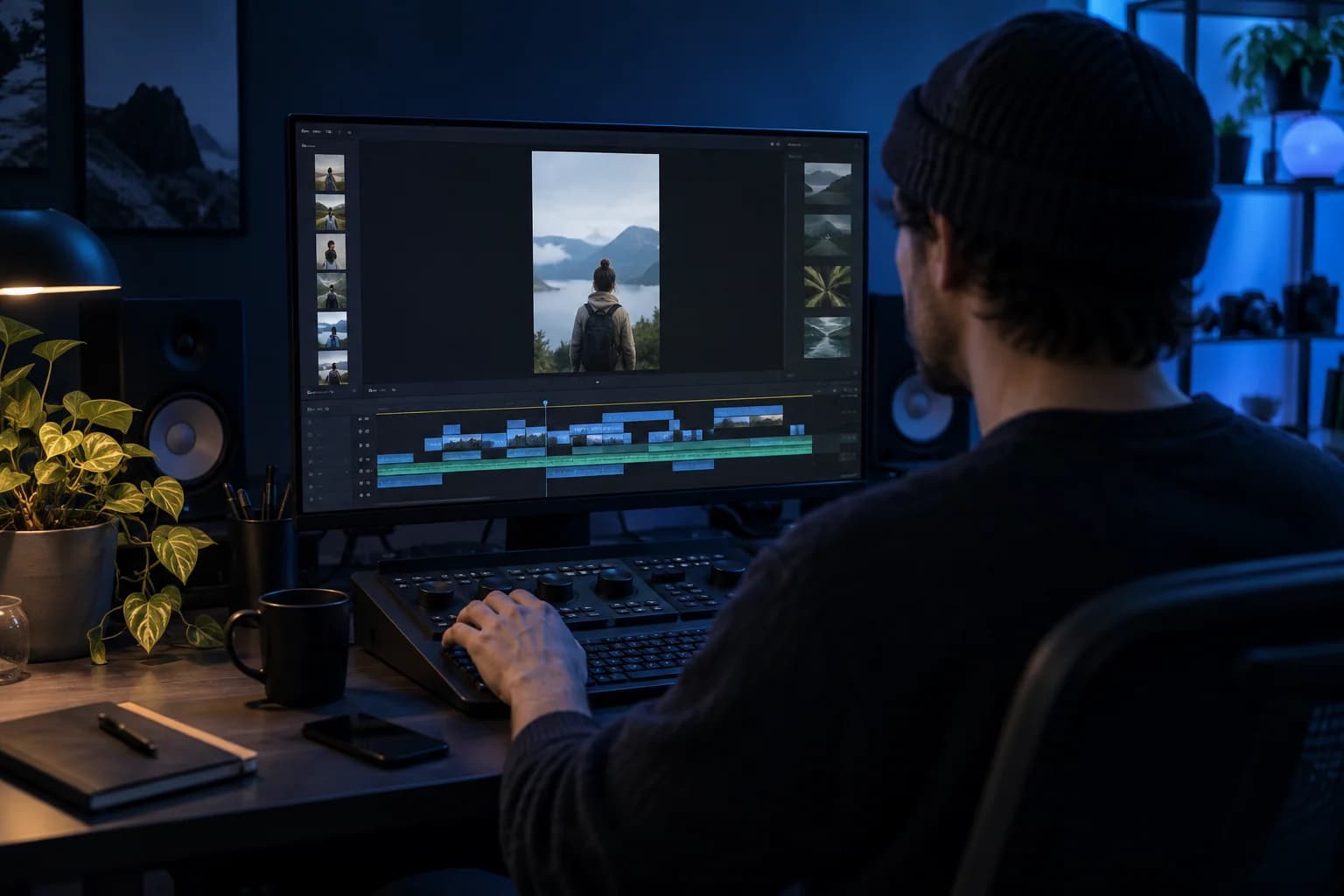
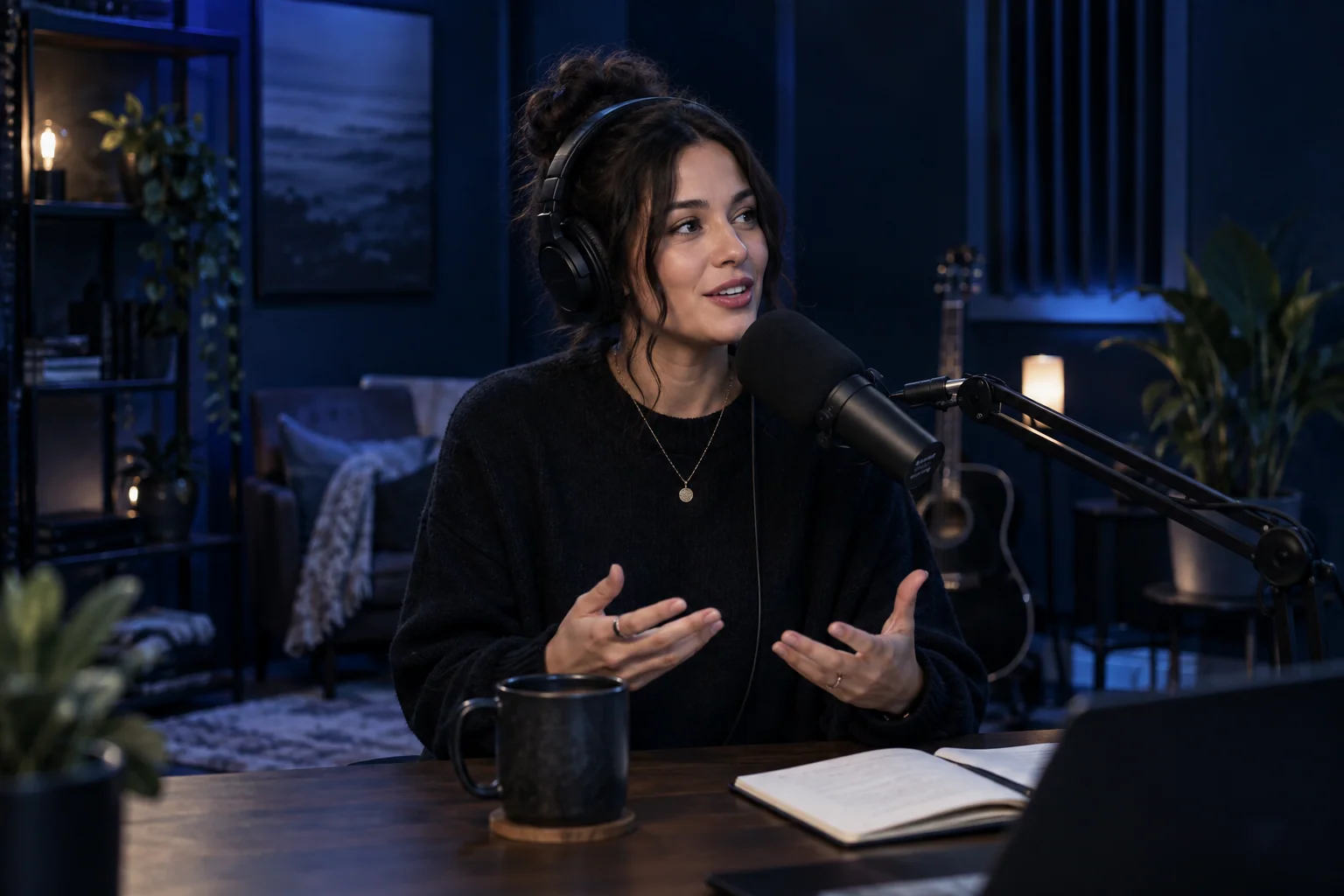
Strong podcast clipping turns complete, audience-relevant moments into distinct short-form entry points. It preserves speaker intent, gives each clip a reason to exist, and measures more than one dramatic outlier.
Choose episodes for clip potential
A famous guest is not a clipping strategy. Select episodes with clear audience relevance, standalone ideas, useful stories, strong production quality, valid permissions, and an action the viewer can take next.
A transcript helps estimate moment density before production. Mark recurring themes, surprising claims, emotional turns, frameworks, disagreement, and concrete examples.
Build a moment map
Instead of requesting ten clips, map the episode across creative roles. One moment can introduce expertise, another can create identification, another can challenge an assumption, and another can lead naturally to the full episode.
This prevents a campaign made entirely of the loudest quotes.
- Discovery: a surprising or useful idea
- Trust: expertise, proof, or a clear framework
- Story: tension, change, or lived experience
- Personality: chemistry, humor, or candid reaction
- Conversion: a reason to continue with the show
Protect context
Podcast speech is conversational. A compact cut may remove detours, but it should not remove the condition that makes a claim accurate or rearrange statements into a conclusion the speaker did not make.
Review the surrounding transcript, identify every speaker clearly, and check sensitive claims, third-party stories, music, sponsor language, and guest agreements.
Edit for someone who does not know the show
Remove housekeeping and slow introductions. Establish the subject quickly. Use captions that prioritize meaning rather than decorating every word. Keep the frame active without distracting from the idea.
End when the payoff lands. A forced cliffhanger can reduce trust when the missing answer does not exist in the source.
Measure the show, not only the post
Track which guests, themes, opening structures, lengths, formats, and CTAs create repeatable attention. Add show-level outcomes where reliable: episode visits, follows, newsletter actions, or profile intent.
Use those findings to improve guest preparation, episode structure, recurring segments, titles, and the next clipping brief.
Listen for moments a new listener can understand
Your existing audience may understand an inside joke, a recurring argument, or a guest’s background. A new viewer usually will not. Choose moments that either carry their own context or can be introduced accurately in a short on-screen premise.
Mark examples, personal turning points, useful disagreements, and answers to questions your intended audience asks. A guest’s strongest statement is not always the best clip if it depends on a long explanation that the edit cannot preserve. Keep the surrounding conversation available to the editor.
Create a varied batch from one episode
For an interview about changing careers, a sample batch might include the guest’s first failed attempt, one practical preparation step, an unexpected tradeoff, a common misconception, a question for the audience, and a reason to hear the full conversation.
That is a creative menu, not a required quota. If the episode supports only three complete ideas, making six near-duplicates will not create six new reasons to watch. Scope the batch after reviewing the material rather than promising a fixed yield from every recording.
Make a two-person conversation work vertically
Choose framing that makes the active speaker easy to follow without discarding a meaningful reaction. When a hand gesture, object, or shared screen explains the point, preserve it. Use a layout that serves the conversation rather than changing shots simply to create motion.
Check captions for names, technical terms, and changes of speaker. Watch a muted export to see whether the essential point remains understandable, then watch with sound to catch awkward cuts and audio jumps. These are different checks; passing one does not mean the other is complete.
Connect the clip to the full episode
Tell viewers what they will get from the longer conversation. ‘Watch the full episode’ is less informative than a specific invitation to hear how the guest made the decision or tested the approach. Make sure the account’s destination actually leads to the relevant episode.
Coordinate with the guest before publication when approval, attribution, or promotional timing is part of the agreement. Provide the approved clip and proposed caption together. A guest should not discover that the post copy makes a stronger claim than the video they reviewed.
How long should a podcast clip be?
Keep the shortest version that delivers a complete idea without rushing it. Some moments need a question and an answer; others need a brief example before the lesson makes sense. Choose duration from the thought, then check the destination’s current format requirements.
Use the hook library to explore different openings, and compare a podcast campaign approach before selecting a pack. In the brief, include the episode link, the audience, guest restrictions, and the themes you want new listeners to associate with the show.